Apple’s new, lower-cost 5G-enabled iPhone won’t move the needle on 5G adoption
But it could shore up Apple’s position as the leader in 5G smartphone shipments.
Apple
Loading story content…
But it could shore up Apple’s position as the leader in 5G smartphone shipments.
Apple
5G might not be catching on everywhere, but its odds are better now that Apple is offering a more accessible entry point to the tech.
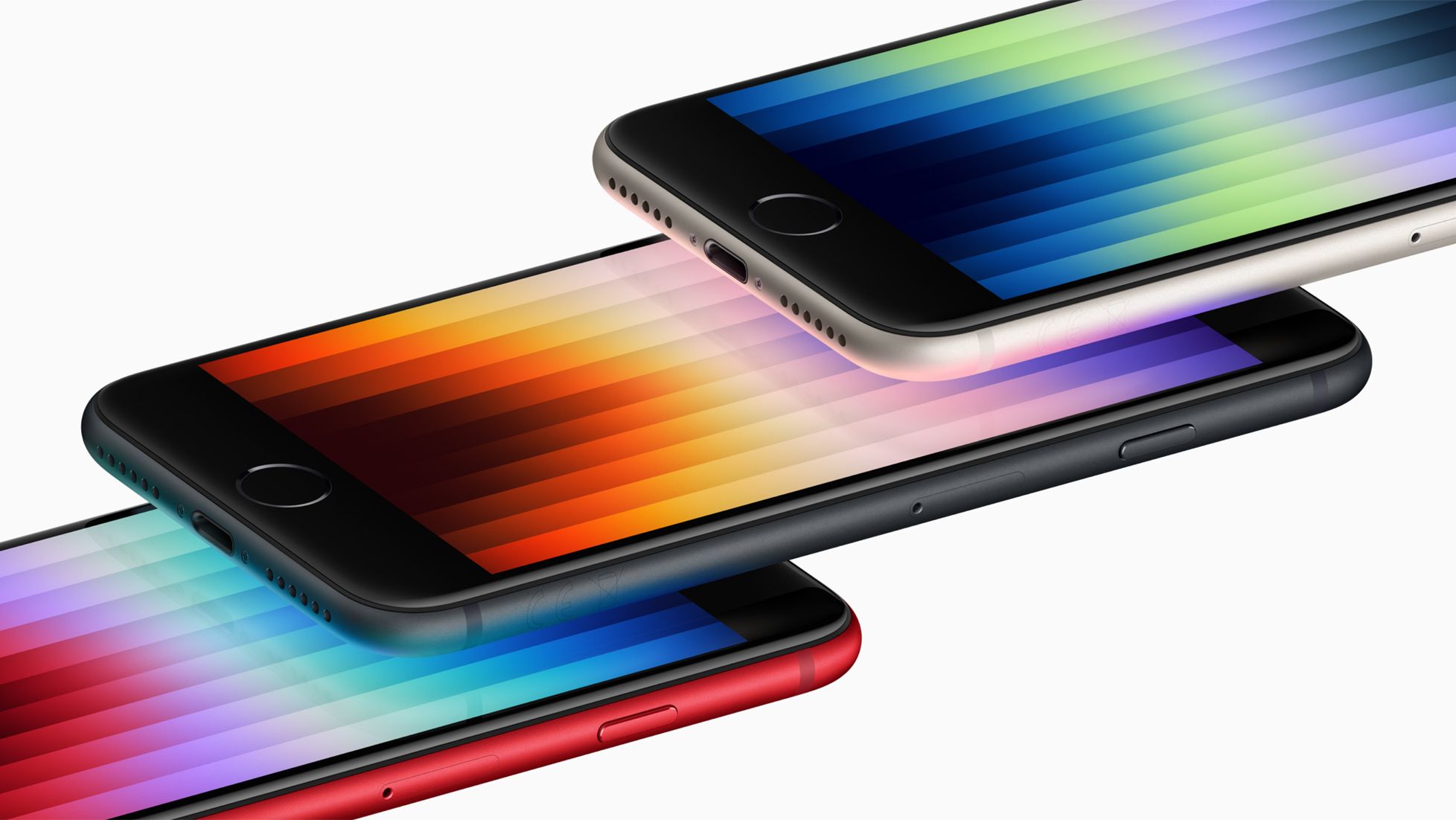
Earlier this month, Apple announced a new 5G-equipped model in its SE series, a scaled-down, less expensive version of the iPhone.
What it means: A more affordable 5G-capable iPhone will almost certainly result in more people having 5G access, but that doesn’t necessarily mean it will be a game-changer for the tech’s usage. Prices are steadily decreasing for 5G devices every year, but the technology still is in search of the killer app needed to convert users en masse.
“I think people are going to be incentivized to switch [to 5G] by having new features and faster throughput,” Anshel Sag, principal analyst at Moor Insights & Strategy, told Emerging Tech Brew. “New use cases are ultimately going to be what drives users more than anything. And we’re still kind of a bit far from that, because the operators haven’t really launched their standalone services.”
But, but, but…The new SE could help shore up Apple’s position as a leader in 5G smartphones and handsets. Apple already leads the world in 5G smartphone sales, accounting for 37% of 5G sales in January.
Ultimately, in terms of 5G adoption, “it won’t necessarily tip the needle over in the beginning,” Maurice Klaehne, senior market research analyst at Counterpoint Research, told Emerging Tech Brew.
“But the SE has a lot of longevity,” he said. “That’s why Apple also waited a long time to upgrade to this latest device. It has been a mainstay in the prepaid market. This new version will continue to be that and you’ll continuously trickle in new customers, but also upgrade customers that are just coming from an older device and don’t want to pay as much money.”
Zoom out: While the new SE has 5G capabilities, it doesn’t utilize mmWave technology—the fastest form of 5G—like the US iPhone 12 and 13 do. Rather, it runs entirely on low- and mid-band 5G, which doesn’t tout the lightning-fast speeds of mmWave, but makes up for that with longer connectivity ranges.
“In very densely populated areas, mmWave absolutely has its place. I just never saw that technology scaling [on] a nationwide footprint because the math of the base stations and the physics of mmWave simply never supported that thesis,” Sag said.