By Hayden Field
• 3 min read
Five leading lidar companies have a combined ~$29 billion market cap
Luminar
By the end of this quarter, there should be at least five publicly traded lidar companies—Innoviz, Aeva, Ouster, Velodyne, and Luminar—with a combined ~$29 billion market cap.
As with any hot technology, there’s a big question to parse: What’s really coming down the 3D sensor pipeline...and what’s just hype? Hayden explored that at a virtual conference yesterday with two panelists.
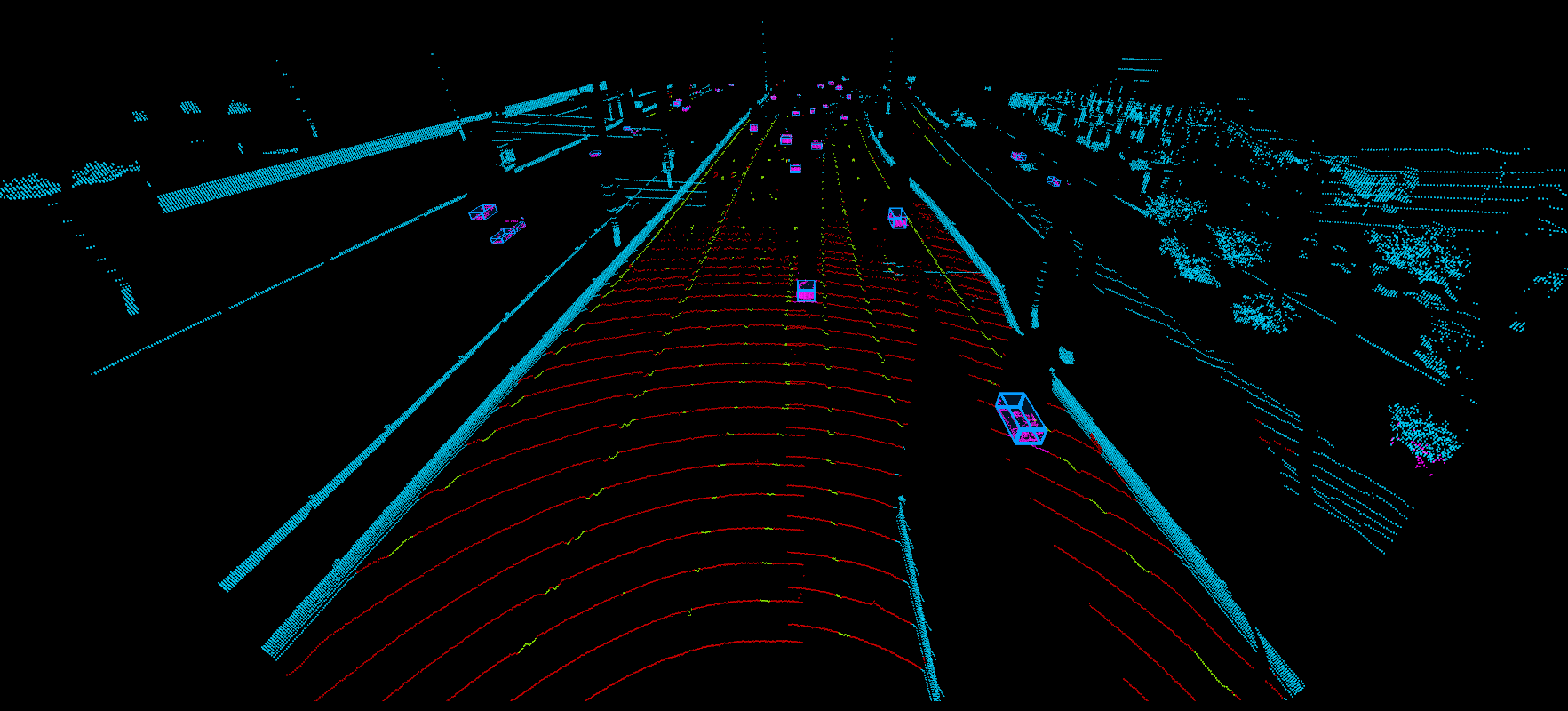
In a tech industry word association game, if I gave you “lidar,” you’d probably come back with “self-driving.”
And you wouldn't be wrong: Lidar helps autonomous vehicles map and safely navigate their surroundings. The use case is top-of-mind for many because it’s futuristic, and it’s big money—a major win at comparably low margins.
But, but, but: The applications for this tech go far beyond cars. Think: construction, delivery bots, factory automation, and consumer appliances—e.g., anything that could benefit from better human-machine interaction.
“Down the line” is the key phrase in all this, and it’s why there’s talk of smoke and mirrors in lidar. Right now there are hundreds of startups, but no at-scale lidar products.
Plus: Lidar leaders’ target customer base and market expectations overlap. As Cruise cofounder Kyle Vogt noted, all five target Advanced Driver Assistance Systems (ADAS) or robotaxis as a key revenue driver, offer value-added software for perception, and bank on the fact that lidar adoption will "balloon."
Dragos Maciuca, executive technical director of Ford, says there is some real, not hype-fueled, promise to multi-sector lidar adoption. But the automotive sector still struggles with the amount of computing power needed to make use of lidar data.
Looking ahead: Fifteen years ago, lidar sensors cost ~$40,000; now, it’s more like $4,000. If and when the price tag hits $400, or even $40, says Stern, that could translate to smarter interaction with the machines we’re constantly surrounded by.