By Dan McCarthy
• less than 3 min read
TOPICS: Emerging Tech / Energy & Climate Innovation / Fusion Energy
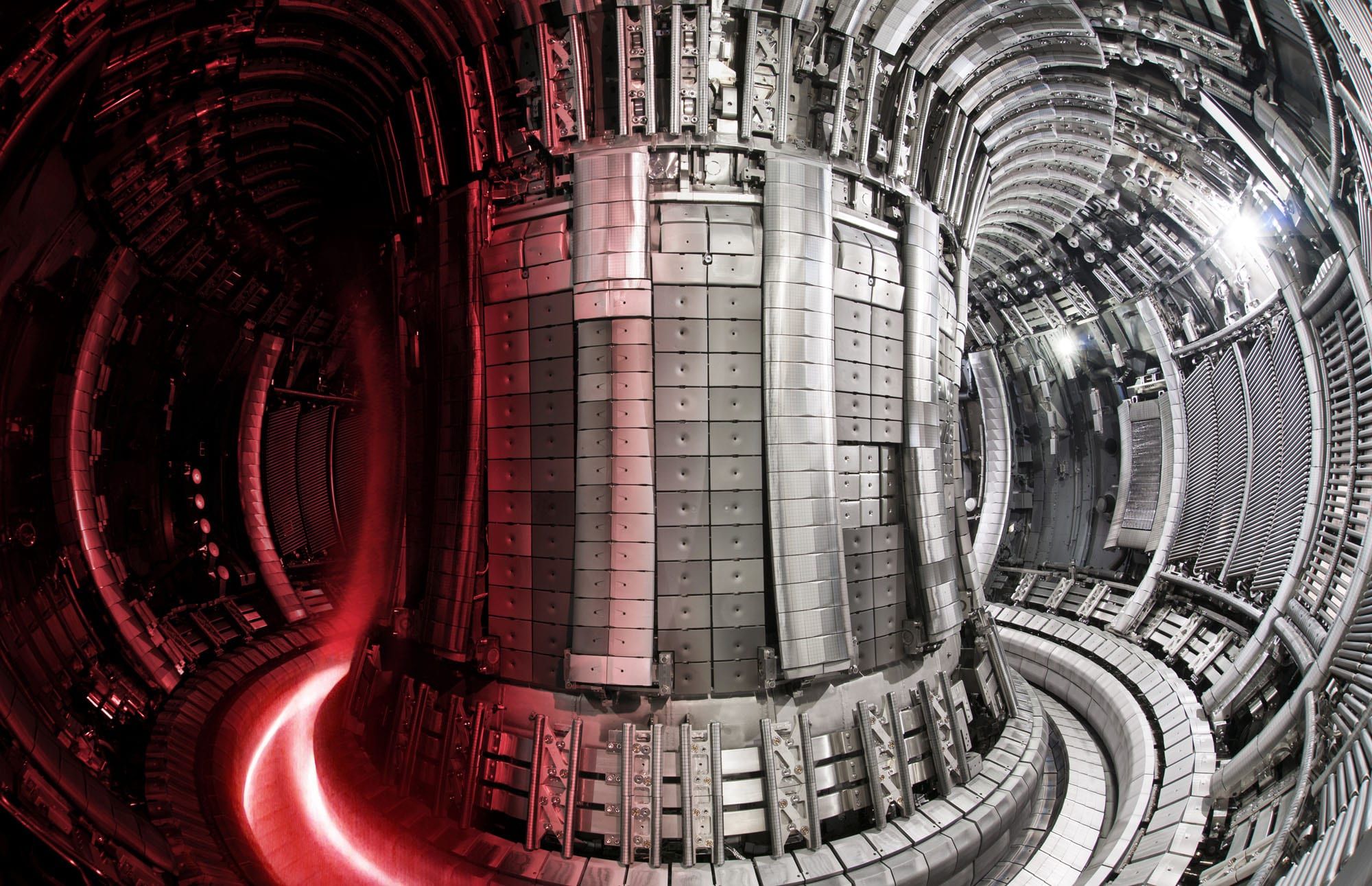
Researchers at Joint European Torus more than doubled a previous fusion record.
EUROfusion
The sun may be suspended in a far-off corner of our galaxy, some 91 million miles away, but on Wednesday, humans moved one step closer to mimicking its power on Earth.
Scientists at the Joint European Torus, a nuclear-fusion experiment based in the UK, announced on Wednesday that they had more than doubled the record for sustained nuclear-fusion time in December.
Even before this milestone, the commercial fusion industry was growing fast—there are at least 35 companies working on fusion worldwide, per the Fusion Industry Association. And late last year, the funding record for a fusion company was broken first by Helion, which raised $500 million in November, and then again by CFS, which raised $1.8 billion in December.
Looking ahead…JET’s breakthrough wasn’t enough to achieve nuclear fusion’s holy grail—generating more power than is used to fuel the reaction. But, according to Nature, it does provide hope for ITER, a $22 billion follow-up project slated for 2025, which will use the same approach to try and produce net power. ITER, based in France, is the world’s largest fusion reactor and a product of collaboration between 35 countries.
But net-power demonstrations—a potential next step for fusion after this achievement—are just another waypoint on the journey to commercially deployed nuclear-fusion energy. Some experts think it will take two or three decades for fusion to make it to the grid.