Tech Industry Criticizes H-1B Restrictions
The tech industry accounts for roughly 75% of all H-1B visas
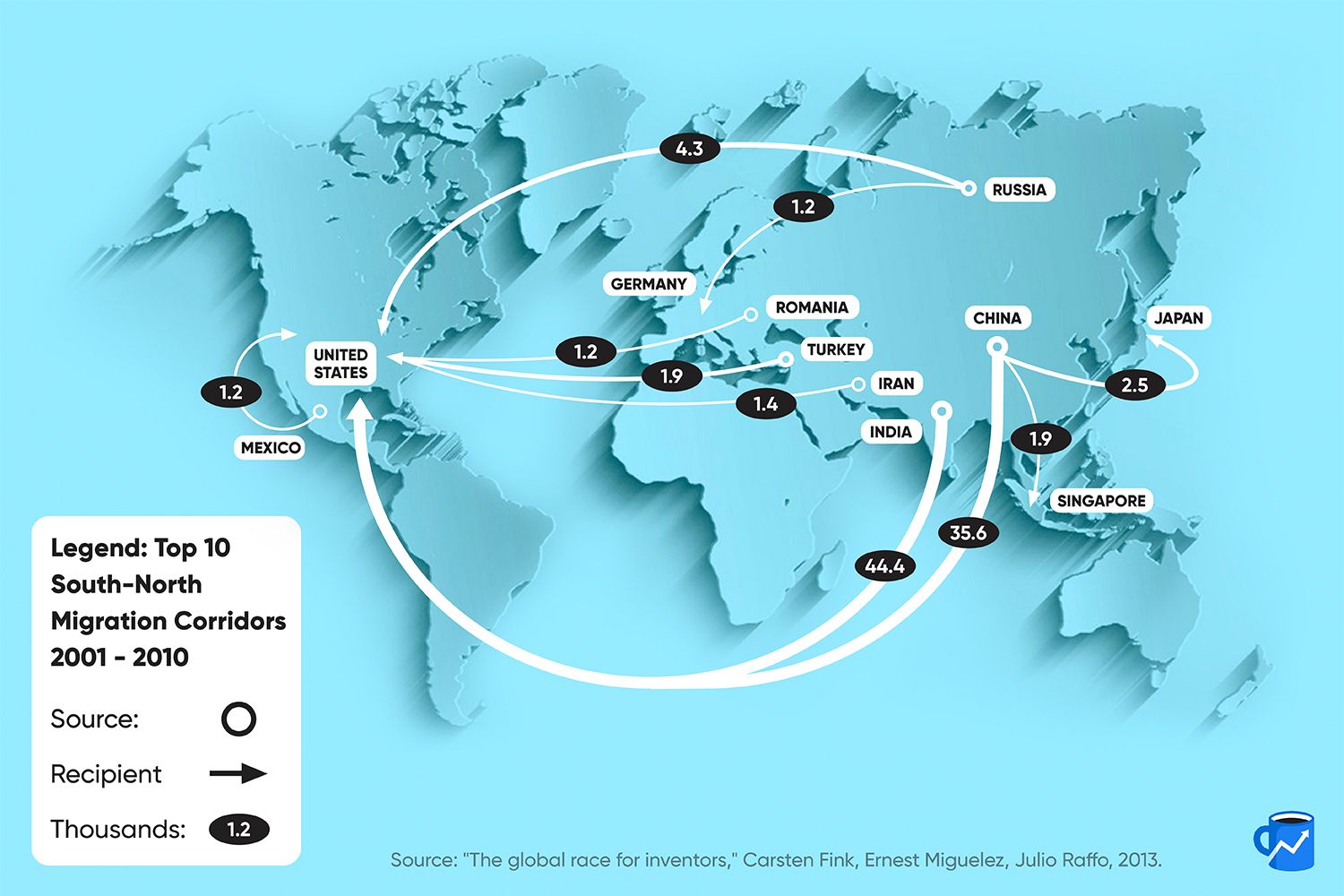
Inventor migration patterns from low/middle-income countries. Source: Francis Scialabba/VoxEU
Loading story content…
The tech industry accounts for roughly 75% of all H-1B visas
Inventor migration patterns from low/middle-income countries. Source: Francis Scialabba/VoxEU
On Monday, President Trump signed an order suspending H-1B and other employment-based visas for the rest of 2020. H-1B visas require specialized skills or education, typically involving STEM.
Google, Amazon, Facebook, Apple, and several other tech companies criticized the decision. The tech industry accounts for roughly 75% of all H-1B visas, and nearly three-quarters of Silicon Valley’s tech workforce are foreign citizens, according to 2016 data from the federal government.
The U.S. has historically—and handily—won the global competition for immigrant inventors, receiving a huge net inflow of talent. Here's what that looked like from 2001–2010:
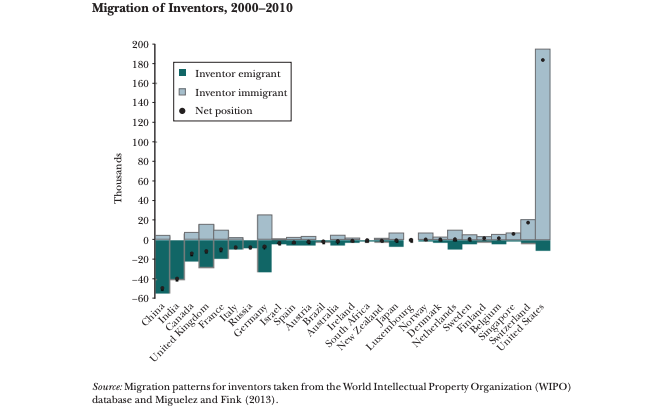
Sari Pekkala Kerr, William Kerr, Çag˘lar Özden, and Christopher Parsons, Journal of Economic Perspectives
At the cutting edge, the U.S.’ AI industry “heavily relies on foreign-born talent,” writes Georgetown’s CSET, and over half of graduate-level U.S.-based computer scientists were born abroad. Roughly 80% of foreign PhDs in “AI-related fields” that trained in the U.S. have stayed in the country.
What’s next? The tech industry will likely fight against H-1B restrictions. If it doesn’t work, the tech brain drain from countries like India and China could reverse...and Canadian recruiters’ jobs will get much easier.