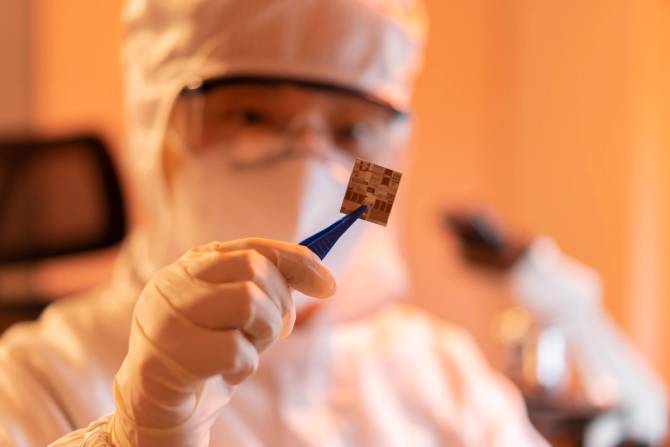
It’s Wednesday, and engineers have discovered one weird trick to make semiconductors more powerful, per the Wall Street Journal: making them bigger.
Miniaturization has been the name of the game for decades, but as devices grow more power-hungry and Moore’s Law pushes up against the edge of physics, a more brute-force approach is coming into vogue.
In today’s edition:
 Amazon’s plan to make Alexa figure things out itself Amazon’s plan to make Alexa figure things out itself
 Everything we wrote about biotech last month Everything we wrote about biotech last month
 Reader poll: Will we ever get an Apple car? Reader poll: Will we ever get an Apple car?
—Hayden Field, Dan McCarthy
|
|
Yagi Studio/Getty Images
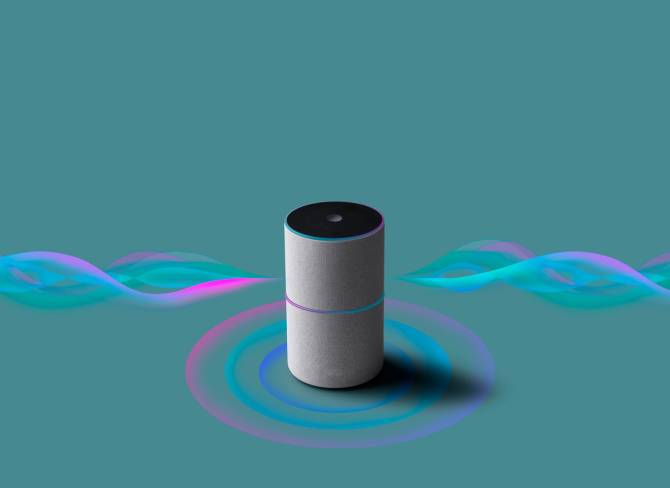
In 2020, Amazon encouraged users to teach Alexa how to interpret certain requests.
Now, like a Montessori teacher, Amazon wants the AI system to figure some things out on its own.
This approach, which Amazon dubbed “self-learning,” is all about decreasing friction and making human-AI interaction feel more natural. In the last year, the company has begun adding a suite of such features to consumer devices worldwide.
- Self-learning boils down to advancing Alexa’s capacity for common-sense reasoning, which is one of AI’s most notorious obstacles.
- More widely known as “self-supervised learning,” it’s essentially a form of AI learning that’s, well…not supervised. Instead of learning from human-labeled data, the AI analyzes data on its own to draw conclusions.
Zoom out: Self-supervised learning is one reason why natural language processing—a subset of AI that underpins tools from Google Search to auto-complete—has advanced so much in recent years. Meta has used it for image training; Google has used it for medical-image classification; and Amazon has used it for automated speech recognition.
“Instead of a bunch of scientists taking data and trying to update the models and then roll them out, self-learning is something that works out in the field—there’s no human intervention, no human involvement,” Prem Natarajan, Alexa AI’s VP of natural understanding, told us. “It’s directly learning through its interactions with customers, whether it’s implicit customer behavior or otherwise.”
Keep reading to...learn...what self-learning looks like for Alexa.—HF
|
|
|
Do your thumb muscles ache from managing your assets across a ton of different apps? Let eToro help you simplify your home screen and diversify your portfolio.
With eToro, you can get all your investments in one app. The platform lets you diversify your portfolio with an array of assets. New to investing? Get to know the industry with eToro’s market guides and weekly newsletter.
Plus, using their virtual portfolio, you can experiment with $100k in “play money.” As far as real money goes, eToro has no holding fees, nor do they charge conversion fees for deposits or withdrawals in USD.
Give those thumbs a break and diversify your portfolio with eToro. For a limited time, get $10 when you deposit $100.
|
|
Francis Scialabba
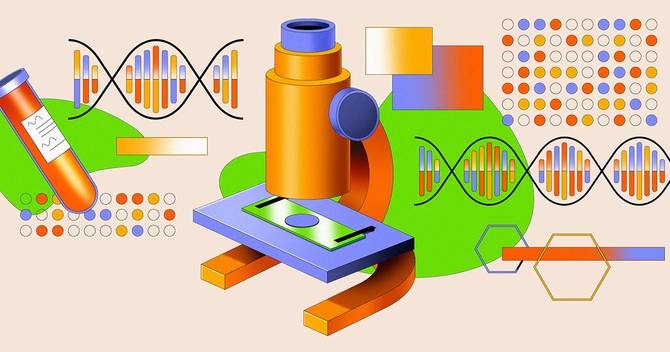
We don’t like to play favorites here at Emerging Tech Brew, but across July, we did. Last month, we traded hardware for wetware and zoomed in on biotech.
Here’s a quick speedrun through them:
 Startups are deploying a thousand-year-old agriculture method to help with carbon removal. Stems, leaves, trunks, roots, flowers, and fruits are the original carbon-removal tech. Now, startups are catching on and trying to develop ways to optimize and accelerate naturally occurring carbon sequestration processes. Startups are deploying a thousand-year-old agriculture method to help with carbon removal. Stems, leaves, trunks, roots, flowers, and fruits are the original carbon-removal tech. Now, startups are catching on and trying to develop ways to optimize and accelerate naturally occurring carbon sequestration processes.
 This startup wants to invent brand new forms of meat. From juicy ribeyes to sushi-grade salmon, cultivated-meat companies have grand plans to reproduce the most popular proteins in the world. But Vow Food is placing a different bet: It wants to bioengineer brand new, better forms of meat. This startup wants to invent brand new forms of meat. From juicy ribeyes to sushi-grade salmon, cultivated-meat companies have grand plans to reproduce the most popular proteins in the world. But Vow Food is placing a different bet: It wants to bioengineer brand new, better forms of meat.
 How synthetic biology startups plan to revolutionize fertilizer production. A group of startups, including Pivot Bio and Joyn Bio, are leveraging the promise of synthetic biology to try and produce affordable, environmentally friendly fertilizer at scale. The push for these bio-based fertilizers is in its early stages, but experts told us the concept holds promise in the long term. How synthetic biology startups plan to revolutionize fertilizer production. A group of startups, including Pivot Bio and Joyn Bio, are leveraging the promise of synthetic biology to try and produce affordable, environmentally friendly fertilizer at scale. The push for these bio-based fertilizers is in its early stages, but experts told us the concept holds promise in the long term.
 From infant poop to trance music, here’s a play-by-play of a CRISPR experiment. Much has been made of the technology’s revolutionary potential, but today we’re lifting the veil on what CRISPR looks like in a hands-on setting, via CRISPR co-inventor Jennifer Doudna’s lab. From infant poop to trance music, here’s a play-by-play of a CRISPR experiment. Much has been made of the technology’s revolutionary potential, but today we’re lifting the veil on what CRISPR looks like in a hands-on setting, via CRISPR co-inventor Jennifer Doudna’s lab.
View all the stories in one place.—DM
|
|
Francis Scialabba
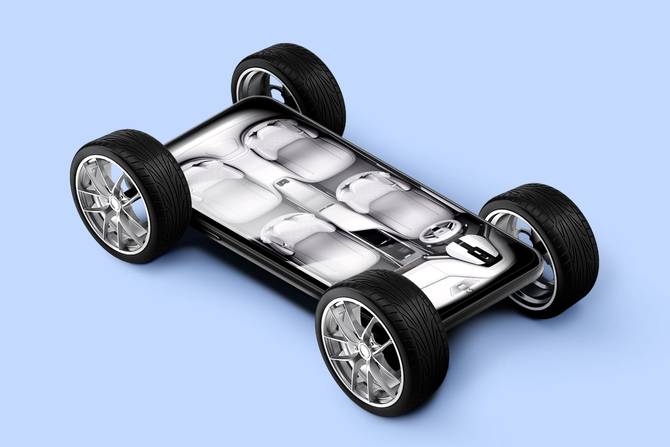
The iCar. The Apple car. The Tim Cookmobile.
Whatever you’ve taken to calling the iPhone-maker’s mythical driving machine, one thing is true: You can’t buy one. Despite years of work—and rumors—the project is still closely guarded and no product has been revealed to the public.
Last week, we asked all of you to weigh in on whether Apple will ever bring a vehicle to market. The results are in, courtesy of nearly 3,000 Emerging Tech Brew readers…
-
Just under half (47%) of you think Apple will eventually unveil a purchasable car.
-
Just over half (53%) think the opposite: Apple won’t ever be an automaker.
The company has been working on the project, dubbed Project Titan, for eight years, and in recent weeks it has been reported that its efforts have been plagued by everything from managerial challenges, like shifting goals and leadership, to technical issues with automated driving software.
- Apple has reportedly spent $1+ billion per year on R&D for the project, and several senior execs—including Tim Cook—are either skeptical or lukewarm about it.
On the other hand: Project Titan continues to move and shake—it recently poached a long-time Lamborghini exec, for instance.
But perhaps more importantly: Apple is extremely profitable and also tends to sit on tens of billions of dollars in cash reserves. It has money to burn on moon-shot ideas—like a self-driving electric vehicle.—DM
|
|
|
Have a say in what you see around here. Join The Breakroom, an elite group of Brew readers who share insights and ideas to help us put out the kind of content you’ll love. Psst: You also get exclusive Brew benefits for taking part. Learn more here.
|
|
Sinology/Getty Images
Stat: Oh, you thought the US’s ~$52 billion in semiconductor subsidies was big? South Korea (~$260 billion) and China ($150 billion) would like a word.
Quote: “The industry folks don’t really care about the data…They just grab whatever’s easiest. People think it’s all the same and you just need more of it.”—Maarten Sap, an expert in natural language processing, to the Washington Post
Read: The awful, inexorable march of deepfake porn.
Plants in your pants. Through the sustainable power of plants, DUER makes the world’s most comfortable pants—keeping your legs and the environment happy. Get 15% off with code MorningBrew.*
*This is sponsored advertising content.
|
|
-
Toyota-Panasonic, via a joint venture on battery production, inked an agreement to buy lithium from ioneer’s forthcoming Nevada mine.
-
Nikola bought Romeo Power, a battery supplier, for $144 million.
-
The US opened bidding for another 5G spectrum auction. Elsewhere in selling air: In India, Jio won the right to $11 billion worth of 5G spectrum.
-
NuScale, a startup that makes small, modular nuclear reactors, received a certification for its design from the Nuclear Regulatory Commission.
-
Innoviz said VW ordered $4 billion worth of lidar sensors from it.
-
China’s virtual influencer industry is booming—but often grueling for the humans that support it.
Snap poll: Have you ever followed or engaged with a virtual influencer (e.g., Lil Miquela)?  Yes Yes
 No No
|
|
Catch up on the top Emerging Tech Brew stories from the past few editions:
|
|
|
✢ A Note From eToro
Securities trading through eToro USA Securities, Inc. Member of FINRA and SIPC. Crypto Trading through eToro USA LLC, not FDIC insured.
|
|


|
|
Written by
Hayden Field and Dan McCarthy
Was this email forwarded to you? Sign up
here.
 Guide →
What is AI?
Guide →
What is AI?
 Guide →
What is 5G?
Guide →
What is 5G?
WANT MORE BREW?
{if !contains(profile.lists,"Daily Business")}
Get the daily email that makes reading the news enjoyable →
{/if}
{if !contains(profile.lists,"EmTech Brew") || !contains(profile.lists,"HR Brew") || !contains(profile.lists,"Marketing Brew") || !contains(profile.lists,"Retail Brew") || !contains(profile.lists,"IT Brew") || !contains(profile.lists,"Future Social") || !contains(profile.lists,"CFO Brew")}
Industry news, with a sense of humor →
{if !contains(profile.lists,"CFO Brew")}
-
CFO Brew: your go-to source for global finance insights
{/if}
{if !contains(profile.lists,"Future Social")}
-
Future Social: the Brew's take on the world of social media
{/if}
{if !contains(profile.lists,"HR Brew")}
-
HR Brew: analysis of the employee-employer relationship
{/if}
{if !contains(profile.lists,"IT Brew")}
-
IT Brew: moving business forward; innovation analysis for the CTO, CIO & every IT pro in-between
{/if}
{if !contains(profile.lists,"Marketing Brew")}
-
Marketing Brew: the buzziest happenings in marketing and advertising
{/if}
{if !contains(profile.lists,"Retail Brew")}
-
Retail Brew: retail trends from DTC to "buy now, pay later"
{/if}
{/if}
{if !contains(profile.lists,"Money Scoop") || !contains(profile.lists,"The Essentials") || !contains(profile.lists,"Money With Katie")}
Tips for smarter living →
{if !contains(profile.lists,"Money Scoop")}
-
Money Scoop: your personal finance upgrade
{/if}
{if !contains(profile.lists,"Money With Katie")}
-
Money With Katie: manifest your financial freedom
{/if}
{if !contains(profile.lists,"The Essentials")}
-
Sidekick: lifestyle recs from every corner of the internet
{/if}
{/if}
 Podcasts →
Business Casual,
Founder's Journal,
Imposters, and
The Money with Katie Show
Podcasts →
Business Casual,
Founder's Journal,
Imposters, and
The Money with Katie Show
 YouTube
Accelerate Your Career with our Courses →
|
ADVERTISE
//
CAREERS
//
SHOP
//
FAQ
Update your email preferences or unsubscribe
here.
View our privacy policy
here.
Copyright ©
2022
Morning Brew. All rights reserved.
22 W 19th St, 4th Floor, New York, NY 10011
|
|