It’s Friday. As governments continue to move slowly, more and more companies, both big and small, are turbo-charging their investments in climate tech. Every moment matters, and every new technology presents potential breakthroughs.
Join us in our virtual event to hear from Logan Grizzel, Partner of MUUS Climate Partners who will reveal the game-changers and promising initiatives reshaping our world. Register now!
In today’s edition:
—Patrick Kulp, Kelcee Griffis, Annie Saunders
|
|
Francis Scialabba
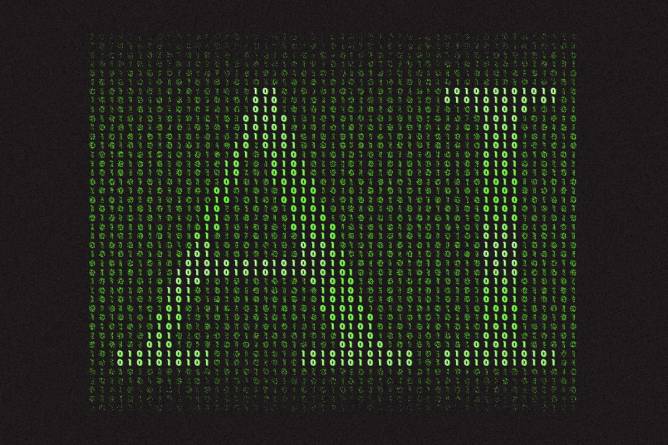
With a flood of sophisticated AI imagery loosening the internet’s already-shaky grip on media reality, one of the most-discussed possible fixes is the tried-and-true watermark.
Concerned parties from Google to the White House have floated the idea of embedding signifiers in AI-generated images, whether perceptible to the human eye or not, as a way to differentiate them from unaltered photos and art.
But a new preprint paper from researchers at the University of Maryland casts some doubt on that endeavor. The team tested how easy it was to fool various watermarking techniques as well as how the introduction of false positives—real images incorrectly watermarked as AI-generated—could muddy the waters.
After laying out the many ways watermarking can fail, the paper concluded that “based on our results, designing a robust watermark is a challenging, but not necessarily impossible task.” In a conversation with Tech Brew, however, co-author Soheil Feizi, an associate professor of computer science at the University of Maryland, was perhaps even more pessimistic.
“I don’t believe that by just looking at an image we will be able to tell if this is AI-generated or real, especially with the current advances that we have in pixel image models,” Feizi said. “So this problem becomes increasingly more difficult.”
Keep reading here.—PK
|
|
What if you could turn your ideas into designs just like *that*? No storyboarding, extensive concepting, or coding—just cool designs, ready when ya need ’em.
Meet Magic Studio from Canva  . All you have to do is upload your text prompt, media, or desired content idea, and Magic Studio will whip up a custom design in seconds. . All you have to do is upload your text prompt, media, or desired content idea, and Magic Studio will whip up a custom design in seconds.
All it takes is one flick of the wrist (and a little AI assistance) to take your design process to the next level. Magic Studio enhances creativity, streamlines workflows, and saves you a whole lotta time.
And Canva’s got a lot more magic for you—like Magic Edit, Magic Grab, and Magic Write—to help you strike the right tone every time.
Work your magic.
|
|
Olemedia/Getty Images
A lot has changed in the world since net neutrality was last in the public dialogue (and by that, we mean on John Oliver’s Last Week Tonight in 2017). Massive wildfires swept through the US and Canada, huge mergers further consolidated the media landscape, and we collectively weathered a global pandemic.
The guidelines promoting a more egalitarian internet were eviscerated during the Trump administration, but Federal Communications Commission Chair Jessica Rosenworcel recently proposed reviving the rules that treat broadband as an essential service—on the same level as water or electricity—and mandate that ISPs can’t discriminate against or interfere with how content is transmitted.
“The threats to the networks right now are different than where we were in 2015 and 2017. That’s creating a more narrow, focused, targeted conversation,” Chip Pickering, CEO of network trade group Incompas, told IT Brew.
Keep reading here.—KG
|
|
Martin Barraud/Getty Images
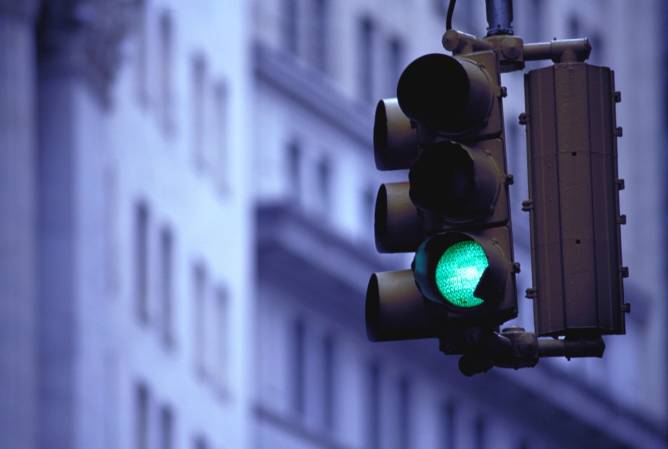
Time spent sitting in your car at a red light is more than just an annoyance—it’s also terrible for the environment. That’s why Google is out to prove that AI can help make a dent in those idle periods by coordinating stoplights more efficiently.
Two years after it first debuted Project Green Light, the tech giant said initial results show the effort has the potential to reduce stops by 30% and cut emissions at intersections by 10%.
- Google has since expanded the program to a dozen cities across four continents, including Seattle, Rio de Janeiro, Hamburg, and Jakarta, and plans to add more next year.
Keep it light: In a 2015 study, scientists estimated that city intersections tend to harbor around 29 times more pollution than the open road. That extra pollution—not to mention the headaches that traffic snarls cause city planners—led to a growing field of research around smarter intersections that make use of tech like AI.
Google claims Project Green Light works by using information from Google Maps and AI to “model traffic patterns and make recommendations for optimizing the existing traffic light plans.”
Keep reading here.—PK
|
|
|
Sip more, stress less. Know what doesn’t pair well with a seasonal latte? Endless invoices and approvals that demand your attention. Fortunately, BILL can help you approve, pay, and sync bill payments; send custom invoices; and get paid faster. Take a demo before Oct. 31 and get a $50 Starbucks gift card.
|
|
Morning Brew
|
Squeezed by deadlines? Before you stress, learn how to turn your panic into elite performance with our Performing Under Pressure sprint. This course—led by the Toronto Raptors’ senior wellness and development director, Alex Auerbach—kicks off on Oct. 16, so secure your seat now.
|
|
Stat: At least 25%. That’s how much venture-capital deals to digital health startups are expected to decline this year compared to 2022, Healthcare Brew reported, citing PitchBook Data.
Quote: “As we go boldly forth into this future, a photo is no longer a visual fact.”—Ren Ng, a computer science professor at UC Berkeley, to the New York Times’s Brian X. Chen in a story about new AI photo-editing tools
Read: Inside FTX’s all-night race to stop a $1 billion crypto heist (Wired)
Abracadabra 🪄: Canva’s Magic Studio can turn your ideas into content faster than you can utter a spooky incantation. Provide a text prompt, upload your media, and watch the magic happen.*
*A message from our sponsor.
|
|
Code6d/Getty Images
Usually, we write about the business of tech. Here, we highlight the *tech* of tech.
The other Ren-AI-ssance tour: The Washington Post recently published a good-to-share-on-Thanksgiving-with-your-family guide to spotting misinformation, focused on tips to help identify when AI has been used to create or edit images, videos, and news stories. One good idea that we will always endorse: Find news through multiple, reputable sources. That works with both sophisticated AI and the regular, ol’ human-made stuff.
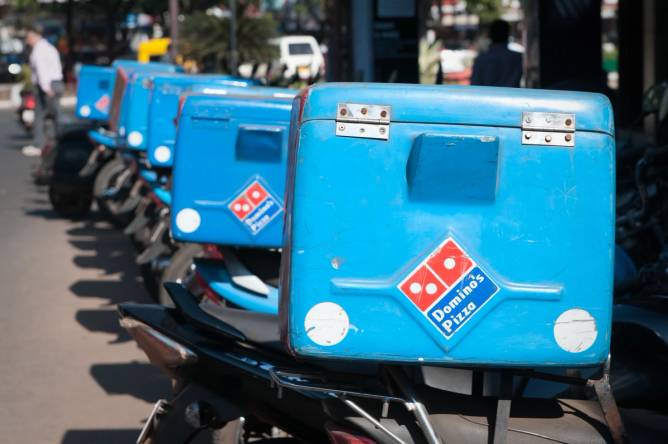
Fast-casual Fridays: Domino’s Pizza is now “optimizing” ordering systems, employee scheduling, and other key operational aspects of its business using Microsoft’s Azure Open AI Service and Cloud. Domino’s will introduce a new “Innovation Lab” as part of the partnership, where engineers from both companies will problem-solve for the future of pizza. The companies emphasized responsible use of AI and protection of private consumer data—a relief for those of us who would rather not discuss our infrequent but very real history of ordering pizza while on vacation, where the calories from the second slice don’t count.
|
|
ADVERTISE
//
CAREERS
//
SHOP
//
FAQ
Update your email preferences or unsubscribe
here.
View our privacy policy
here.
Copyright ©
2023
Morning Brew. All rights reserved.
22 W 19th St, 4th Floor, New York, NY 10011
|
|







 Guide →
 Guide →