☕ EREV, explained
To:Brew Readers
Tech Brew // Morning Brew // Update
A burgeoning option in EV tech.

It’s Friday. Buying a car and overwhelmed by the alphabet soup of possibilities? EV. PHEV. ICE. Perhaps you’re familiar with those, but a new option has entered the chat: EREV (pronounced EE-REV). Tech Brew’s Jordyn Grzelewski has all the intel.

In today’s edition:

Jordyn Grzelewski, Tricia Crimmins, Annie Saunders

FUTURE OF TRAVEL

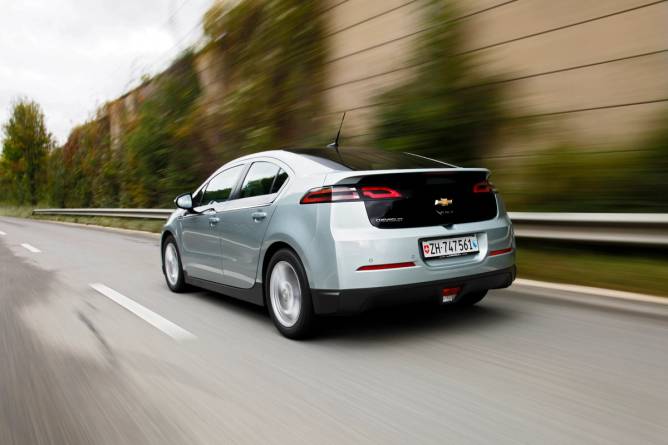
Chevrolet Volt driving

Supergenijalac/Getty Images

Ever heard of an EREV?

If so, congrats—you’re ahead of the curve.

Extended range electric vehicles have taken off in China and are gaining interest from domestic automakers, but the technology faces a nagging obstacle: US consumers largely have no idea what they are. If you fall into that camp, we’ve got you covered.

EREVs are not, in fact, electric vehicles with longer ranges. They are essentially a type of hybrid vehicle.

“You’ve got a gasoline engine that is connected to a generator that feeds into a relatively large battery pack,” K.C. Boyce, a VP in Escalent’s automotive and mobility and energy industry practices, explained in an interview. “The battery pack then feeds into an electric traction motor, which provides propulsion for the vehicle. So essentially what that allows for is a longer all-electric range than a typical plug-in hybrid arrangement, along with consistent performance, because it’s always the electric traction motor that is providing drive.”

What’s in a name? EREVs aren’t a new concept; models like the Chevy Volt have come and gone. But they’ve never succeeded at gaining much traction in the US.

Keep reading here.—JG

presented by Fidelity Private Shares℠

FUTURE OF TRAVEL

A photo composite of a manufactory worker, a car panel with a screen on the dashboard and a table of people planning overlaid with binary code.

Morning Brew Design

Back in 2023, BMW was widely panned for its plan to offer heated seats as a paid subscription.

Steve Basra, Google Cloud’s global head of automotive, believes that the tides have turned since then on what consumers are willing to pay extra for, upending automakers’ plans to create new subscription-based revenue streams.

“Subscription fatigue is definitely a real thing after Covid,” Basra said. “Customers are less willing to pay for things that they believe they should just get when they buy the second most expensive thing in their life.” After a home, that would be a new vehicle, which costs an average of nearly $50,000 in today’s market.

But Basra is bullish on automakers using AI to personalize and improve the in-vehicle experience, thereby creating a value proposition consumers can’t deny.

“A lot of the transformation hasn’t been achieved, and I think AI is the one technology that is going to transform the industry,” Basra said of the industry’s long-hyped transition to EVs and software-defined vehicles, “whether they want to or not.”

Tech Brew recently caught up with Basra, an auto industry veteran who spent 25 years at Toyota, at Google’s Detroit office, where he explained how Google Cloud is helping automotive clients implement AI across their value chains.

Keep reading here.—JG

Together With JumpCloud

GREEN TECH

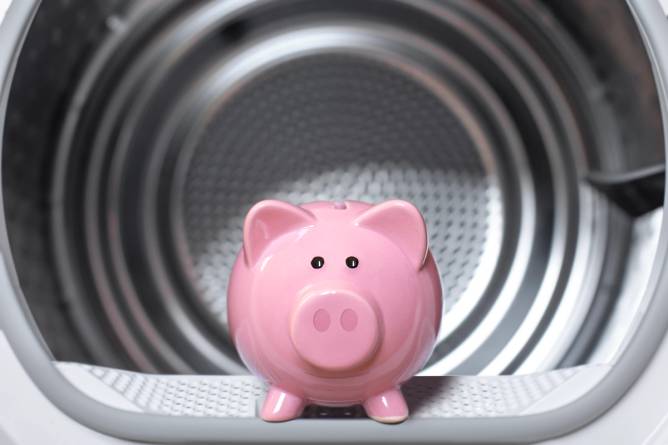
Image of a piggy bank inside of a dryer.

Malerapaso/Getty Images

A congressional hearing went into the kitchens and laundry rooms of most US households earlier this week—metaphorically speaking.

Members of the House Energy and Commerce Committee discussed the Department of Energy’s energy efficiency standards for household appliances and the Energy Policy and Conservation Act, which allows the DOE to create and regulate those standards.

The biggest issue on the docket, however, was the potential cost savings of energy efficiency as a whole. Republicans claimed high-tech appliances cost too much, while Democrats noted that tax credits to lower the price of energy-efficient home upgrades are being phased out by the president’s so-called One Big Beautiful Bill.

“Donald Trump and Republicans have broken their promise to lower costs, and their reckless policies are making life more expensive,” Representative Kathy Castor (D-FL) said in the hearing. “They want to trap Americans with outdated and expensive technologies forever while the rest of the world moves on without us.”

Republicans’ solution, as explained by committee chair Representative Brett Guthrie (R-KY), would be to ease efficiency standards to lower prices without subsidies.

“It doesn’t make products cheaper to make them more expensive and just subsidize on the back end,” Guthrie said. “What we need to do is allow manufacturers to make products that people want to buy at the price they want to pay for it.”

Keep reading here.—TC

Together With Capital One

BITS AND BYTES

Stat: 15%. That’s how much shares of buy now, pay later company Klarna rose after its IPO debut on Wednesday, Bloomberg reported.

Quote: “The philosophical question that we’re trying to wrestle with is: When the simulation is near perfect, does that make it real? You can’t claim that it is objectively real, because it just isn’t. It is a simulation.”—Mustafa Suleyman, Microsoft’s CEO of AI, to Wired about the “illusion” of AI consciousness

Read: AI is coming for YouTube creators (The Atlantic)

VC trends : What should startups know when it comes to venture capital dealmaking? Find out in this guide from Fidelity. It’s got insights on AI-driven growth, market recovery, and exit strategies.*
*A message from our sponsor.

COOL CONSUMER TECH

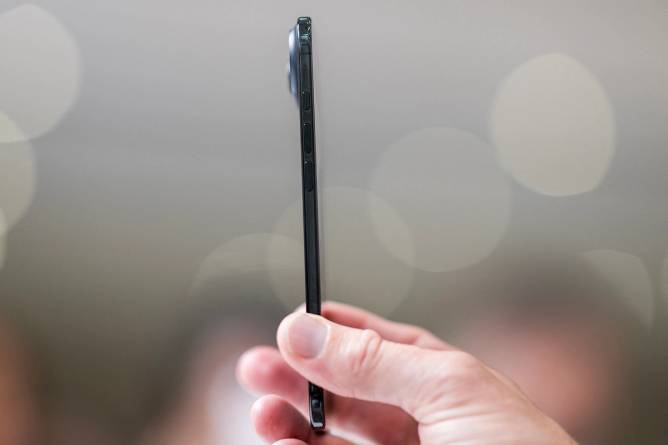
Apple iPhone Air

Nic Coury/Getty Images

The skinny: ICYMI, Apple dropped its latest products this week, highlighting the iPhone Air, a slimmed-down redesign that’s just 5.6 millimeters thick. But even though “Air” contains the letters A and I, there wasn’t much about artificial intelligence during the annual product keynote on Tuesday. Morning Brew has more details.

Working Livestreaming for the weekend: Live shopping, already all the rage in East Asia, has yet to truly catch on in the US. In an effort to get more users to part with their money outside the 9-to-5 grind, TikTok is “incentivizing sellers to livestream on the weekend,” with a program called “Golden Weekend Live.” TikTok declined to comment, but Marketing Brew dug into the specifics of the effort.

JOBS

More focus, less fluff. CollabWORK filters out the noise and delivers jobs that actually match what Tech Brew readers are looking for. Click here to see the full board of curated roles.

SHARE THE BREW

Share Tech Brew with your coworkers, acquire free Brew swag, and then make new friends as a result of your fresh Brew swag.

We’re saying we’ll give you free stuff and more friends if you share a link. One link.

Your referral count: 5

Click to Share

Or copy & paste your referral link to others:
emergingtechbrew.com/r/?kid=9ec4d467

         
ADVERTISE // CAREERS // SHOP // FAQ

Update your email preferences or unsubscribe here.
View our privacy policy here.

Copyright © 2025 Morning Brew Inc. All rights reserved.
22 W 19th St, 4th Floor, New York, NY 10011

Tech news that makes sense of your fast-moving world.

Tech Brew breaks down the biggest tech news, emerging innovations, workplace tools, and cultural trends so you can understand what's new and why it matters.

A mobile phone scrolling a newsletter issue of Tech Brew