Good morning. If you enjoy hanging out at Penn Station for longer than absolutely necessary, here’s some exciting news: The first entirely hydrogen-powered passenger train service debuted last week in northwest Germany.
The trains can run all day—up to 620 miles—on a single tank of hydrogen, and they’re reportedly quieter than most. No word yet on whether or not they still choo-choo.
In today’s edition:
 How AI could transform the grid How AI could transform the grid
 Gene-edited fruits and veggies Gene-edited fruits and veggies
—Hayden Field, Grace Donnelly, Jordan McDonald
|
|
Francis Scialabba
Whether you’re reading this at home, your office, or a coffee shop, you’re likely not far from an unassuming gray box that charts your every move—at least, as far as energy usage goes.
These familiar electric meters send energy-usage information to the utilities operating the power grid. At the moment, the devices—and the utilities themselves—can chart how much energy a customer is using and then bill them for it, but despite all this data, many utilities may be unable to tell if a local transformer is close to overloading.
Some startups, tech giants, and researchers believe it’s time for AI to play a bigger role.
AI overhaul
Insight into real-time demand is becoming even more necessary as intermittent renewable sources of electricity, like wind and solar, make up a larger portion of electricity supply—and as electricity is projected to become a bigger share of the overall power mix.
Under pressure: Electricity demand is expected to grow nearly 20% by 2050, in large part due to the adoption of clean tech like electric vehicles. Increasingly frequent extreme weather events are also ramping up the pressure on the grid.
“It’s a confluence of things: It’s Mother Nature, it’s the market, and it’s customers being like, ‘I’m sick and tired of losing power all the time,’” Josh Brumberger, CEO of Utilidata, a grid-edge technology company, told us.
- He added, “If you take all the storms and the frequency of outages, and all the complexity of the solar and the EV ramp-up that’s about to happen—and then you layer on the incredible amount of federal spending that’s about to be levied onto the system—I just think the time is now right for these step-change technologies and opportunities.”
The current state: Over 70% of the US energy grid is more than 25 years old, and the Biden administration plans to invest $20 billion to modernize grid infrastructure—the largest US investment of its kind to date. AI could eventually help make that modernization possible.
Ideally, the technology could allow utilities to make more accurate decisions about how much power to generate, improve efficiency, and avoid outages. Nvidia, one of the world’s largest chipmakers, is helping Utilidata design a smart grid chip powered by its Jetson Edge GPU.
Read the full story here.—HF & GD
|
|
TOGETHER WITH MASTERWORKS
|
|
With the economy on shakier legs than a newborn giraffe, the notorious WeWork founder just raised $350m for another mysterious venture. What does the company actually do? Nobody seems to know. But the deal offers a rare glimpse of a massive “smart money” investment.
According to insiders, the most powerful venture capitalists are bloodying each other over prime “real asset” deals. Because real assets—like multimillion-dollar art—can continue to grow, even when the stock market plummets.
This is the same strategy fueling another unicorn called Masterworks, a fintech app that makes it easy for you to invest in iconic art by names like Banksy, Picasso, and Basquiat. With 6 successful exits, their average net return is an eye-popping 27.9%.
Interested? Join 500k+ investors and skip the waitlist with this link.
See important Regulation A disclosures.
|
|
Twomeows/Getty Images
Vegetables get a bad rep. Healthy? Absolutely. Taste and texture? Well…
With science, however, holding your nose while eating your greens may come to an end.
Pairwise, a North Carolina-based company, is working to change views on vegetables and fruit by changing their flavors. To do that, it uses CRISPR—a gene-editing technology—to surgically remove or add desirable traits into common plants we eat, like taking seeds or pits out of fruit.
Gene-targeted flavor
“We use genetics and genomics to find the gene targets that are controlling that flavor underneath it. And then what we do is we look around at the rest of nature, and we say, ‘Is there somewhere where there’s a plant that’s related, but doesn’t have this kind of taste, or is a little bit different?’” Ryan Rapp, chief technology officer at Pairwise, told Emerging Tech Brew.
For context: Gene editing isn’t new to food. Farmers use genetically modified seeds to protect crops from pests, weather, insecticides, and herbicides and GMO crops are mostly used to feed animals.
- Now, Pairwise is taking gene editing a step further and applying the science to fruits and vegetables, eliminating bitter tastes in foods like mustard greens, removing pits from cherries, and getting rid of seeds in berries like raspberries.
Pairwise’s tech has attracted the interest of biotech giant Bayer, which first invested in the company in 2017 and partnered with Pairwise on making plants resistant to fungi, increasing kernel rows on corn, and increasing crop yields per acre.
Big picture: Unlike traditional gene editing that adds additional DNA onto the structure of a plant, Pairwise’s use of CRISPR allows it to remove or change the sequence of DNA to take away select traits or enhance desirable characteristics without fundamentally altering its structure.
- “We try to understand what Mother Nature has done over there, and then we simply use CRISPR to recreate that same thing in the thing that people can eat.” Rapp said.
Pairwise has spent over four years testing and developing its mustard greens, and intends to sell it as the company’s first commercial product in 2023 throughout the Pacific Northwest and California.
Read more about gene-edited vegetables here.—JM
|
|
Francis Scialabba
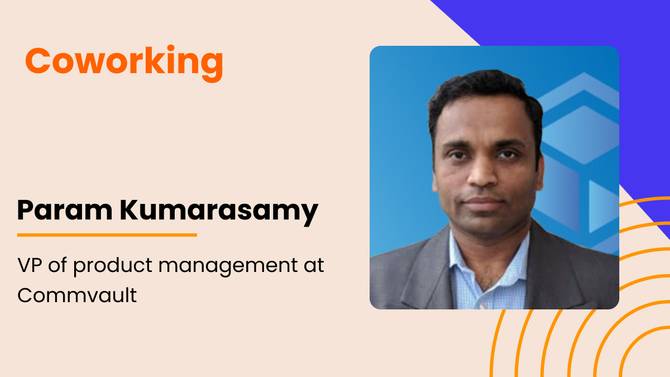
Coworking is a weekly segment where we spotlight Emerging Tech Brew readers who work with emerging technologies. Click here if you’d like a chance to be featured.
How would you describe your job to someone who doesn’t work in tech?
Product management brings together technology, customer needs, and market direction to solve business problems. As a good product manager, I must have visibility into these three areas. That visibility helps to drive the product strategy and roadmap.
What emerging tech are you most optimistic about? Least? And why?
One of the areas I’m most excited about is AI and machine learning (ML) and how it can be applied toward our enterprise data management solutions. For example, by looking at the way hundreds of different customers are using our solutions, we can take those learnings and identify best practices for data management. For example, AI/ML can be useful for anomaly detection, such as quickly detecting and identifying any big changes that are happening with the data, which might indicate a ransomware attack.
I wouldn’t say that I have any areas that I’m least optimistic about. Data growth at exponential rates is causing data-sprawl issues across on-premises and cloud, and that creates opportunities for us to help our customers.
One thing we can’t guess from your LinkedIn profile?
A big part of my role is figuring out: How do we adapt our product releases based on customer trends? How do we make sure our portfolio aligns with customers going through their cloud transformation? How do we define our roadmap so that it aligns with where the industry is heading? Those aspects of the job don’t necessarily leap off the page of my LinkedIn profile.
What do you think about when you’re not thinking about tech?
When you work in tech, it’s important to take a break from the screens when you can! Spend time with the family, participate in sports or other outdoor activities. I’m a long-distance runner, so I aim to chalk up a couple of marathons each year.
|
|
Francis Scialabba
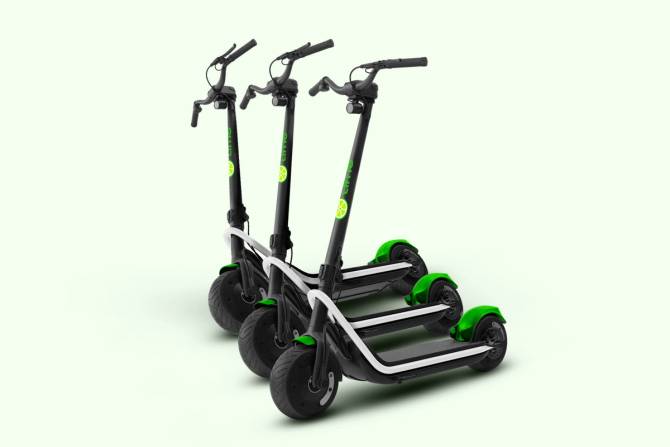
Stat: 298 North American cities offer at least one electric bike or scooter sharing system, and 97 cities offer both, according to the North American Bikeshare & Scootershare Association.
Quote: “Normal people, I think, in the next 10 or 15 years are probably not going to want to get something just installed in their brain for fun.” Mark Zuckerberg, about Elon Musk’s Neuralink on Joe Rogan’s podcast
Read: Silicon Valley startup Sanas is replacing foreign accents in call centers with ones that sound like “white Americans,” opening up questions of bias.
Learn: Ready for your career to move as fast as the emerging tech world? The Brew’s Leadership Accelerator will supercharge your leadership growth in eight weeks. Use code BTS150 to save when you apply today.
Vibe check: If you have a minute, take this quick survey to help us improve the ads you see in this newsletter. Share your thoughts and you may win a $250 gift card.*
*This is sponsored advertising content.
|
|
-
NASA postponed the Artemis I rocket launch this morning after “issues emerged during countdown,” delaying the space agency’s moon mission.
-
California’s state legislature passed a bill to fast-track permitting for residential solar-panel installations.
-
Moderna is suing Pfizer and BioNTech, accusing the companies of infringing on Moderna’s patents for the mRNA technology used to develop the Covid-19 vaccine.
-
The White House issued a new policy that would make all federally funded research immediately available to the public for free no later than 2026.
-
On September 29, we’re (virtually) convening hundreds of business leaders and innovators to discuss pressing technologies across food, energy, and health. You can now join the event and hear from speakers including Mark Cuban for zero cost. Click here to RSVP.
|
|
For decade art: In January 1972—a little over 50 years ago—President Nixon officially directed NASA to build the space shuttle. The agency published three illustrations from that year of what the space shuttle might look like launching, orbiting, and returning to Earth. Enjoy the ’70s vibes.
For cringe content: Try your hand at LinkedInfluencing with this viral-post generator. Input what you did today (whether starting a new job or going for ice cream), some inspirational advice, and the amount of cringe you want the AI to generate—and voilá.
|
|
Catch up on the top Emerging Tech Brew stories from the past few editions:
|
|


|
|
Written by
Hayden Field, Grace Donnelly, and Jordan McDonald
Was this email forwarded to you? Sign up
here.
 Guide →
What is AI?
Guide →
What is AI?
 Guide →
What is 5G?
Guide →
What is 5G?
WANT MORE BREW?
{if !contains(profile.lists,"Daily Business")}
Get the daily email that makes reading the news enjoyable →
{/if}
{if !contains(profile.lists,"EmTech Brew") || !contains(profile.lists,"HR Brew") || !contains(profile.lists,"Marketing Brew") || !contains(profile.lists,"Retail Brew") || !contains(profile.lists,"IT Brew") || !contains(profile.lists,"Future Social") || !contains(profile.lists,"CFO Brew")}
Industry news, with a sense of humor →
{if !contains(profile.lists,"CFO Brew")}
-
CFO Brew: your go-to source for global finance insights
{/if}
{if !contains(profile.lists,"Future Social")}
-
Future Social: the Brew's take on the world of social media
{/if}
{if !contains(profile.lists,"HR Brew")}
-
HR Brew: analysis of the employee-employer relationship
{/if}
{if !contains(profile.lists,"IT Brew")}
-
IT Brew: moving business forward; innovation analysis for the CTO, CIO & every IT pro in-between
{/if}
{if !contains(profile.lists,"Marketing Brew")}
-
Marketing Brew: the buzziest happenings in marketing and advertising
{/if}
{if !contains(profile.lists,"Retail Brew")}
-
Retail Brew: retail trends from DTC to "buy now, pay later"
{/if}
{/if}
{if !contains(profile.lists,"Money Scoop") || !contains(profile.lists,"The Essentials") || !contains(profile.lists,"Money With Katie")}
Tips for smarter living →
{if !contains(profile.lists,"Money Scoop")}
-
Money Scoop: your personal finance upgrade
{/if}
{if !contains(profile.lists,"Money With Katie")}
-
Money With Katie: manifest your financial freedom
{/if}
{if !contains(profile.lists,"The Essentials")}
-
Sidekick: lifestyle recs from every corner of the internet
{/if}
{/if}
 Podcasts →
Business Casual,
Founder's Journal,
Imposters, and
The Money with Katie Show
Podcasts →
Business Casual,
Founder's Journal,
Imposters, and
The Money with Katie Show
 YouTube
Accelerate Your Career with our Courses →
|
ADVERTISE
//
CAREERS
//
SHOP
//
FAQ
Update your email preferences or unsubscribe
here.
View our privacy policy
here.
Copyright ©
2022
Morning Brew. All rights reserved.
22 W 19th St, 4th Floor, New York, NY 10011
|
|